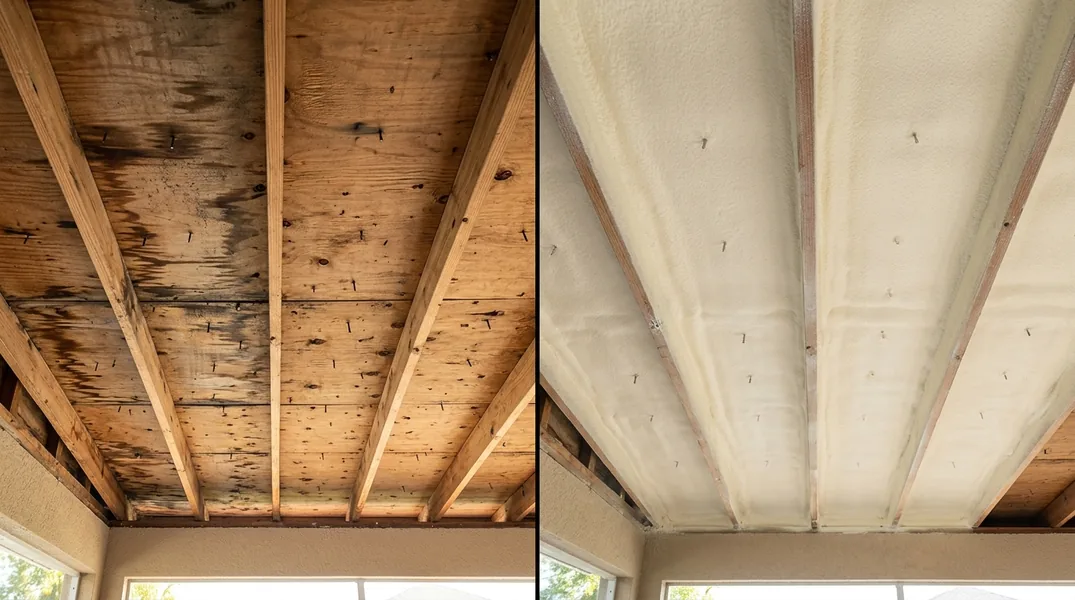
Why Lee County Homeowners Are Choosing Spray Foam After Hurricane Ian
Hurricane Ian left a profound mark on Southwest Florida, and many homeowners in Cape Coral and surrounding Lee County communities are now facing serious decisions about rebuilding and renovation. When it comes to protecting your home from future storms and improving energy efficiency, the insulation you choose matters far more than most people realize. Over the past few years, we've seen a dramatic shift in how homeowners approach attic insulation during reconstruction projects.
The reason is simple: traditional insulation materials like fiberglass batts and blown-in cellulose don't hold up well to the moisture, wind infiltration, and temperature swings that come with hurricane recovery and our subtropical climate. Attic Spray Foam Insulation creates an air-tight seal that not only insulates but also protects your home from water intrusion and air leaks that can compromise structural integrity and drive up energy costs for years to come.
Spray Foam vs. Blown-In Insulation: The Critical Differences
When comparing spray foam to blown-in insulation, the distinction comes down to performance, durability, and long-term value. Blown-in insulation, whether cellulose or fiberglass, works by filling cavities with loose material that settles over time. This settling is a major problem in attics, especially in Florida's heat and humidity. As the material compresses, it loses R-value and creates air gaps where warm or cool air can escape. In a post-hurricane rebuild, these gaps can also allow moisture and pests to enter your attic space.
Spray foam, on the other hand, expands as it's applied and hardens into a solid, monolithic barrier. It doesn't settle, doesn't compress, and maintains its R-value for decades. For homeowners in Cape Coral dealing with reconstruction after storm damage, this means better moisture control, superior air sealing, and peace of mind that your investment will protect your home year after year. The upfront cost of spray foam is higher than blown-in insulation, but when you factor in energy savings and the elimination of future moisture problems, the return on investment becomes clear.
Spray Foam vs. Fiberglass: Why Modern Rebuilds Demand Better Protection
Fiberglass batts have been the standard for residential insulation for decades, and they remain affordable and easy to install. However, fiberglass has significant limitations that make it a poor choice for hurricane-prone regions and moisture-sensitive environments like attics in Southwest Florida. Fiberglass doesn't create an air seal. It simply slows heat transfer, which means air can still leak around the batts, through gaps, and past seams. Water vapor passes right through fiberglass, which can lead to mold growth, wood rot, and structural damage if your roof is compromised during a storm.
Spray foam addresses these weaknesses directly. Closed Cell Spray Foam Insulation is especially valuable for attics because it provides a vapor barrier as well as insulation. It seals every crack, crevice, and penetration in your attic space, preventing moisture from entering and air from escaping. For homeowners rebuilding after hurricane damage, this dual protection against air leaks and moisture intrusion is invaluable. Your attic stays drier, your home stays cooler in summer and warmer in winter, and your HVAC system doesn't have to work as hard to maintain comfortable temperatures.
Spray Foam vs. Cellulose: Making the Right Choice for Your Lee County Home
Cellulose insulation is made from recycled paper and is often marketed as an eco-friendly alternative to fiberglass. While the environmental aspect is appealing, cellulose has serious drawbacks for homes in hurricane-recovery mode. Cellulose is highly susceptible to moisture absorption. If your roof leaks or your attic experiences any water intrusion, cellulose will absorb that moisture like a sponge. Once wet, cellulose loses its insulating properties, promotes mold growth, and can take weeks to dry out. In Florida's humid climate, this is a recipe for long-term problems.
Additionally, cellulose settles more dramatically than fiberglass over time, especially in warm climates where the material becomes more compressible. This means your R-value drops steadily year after year. Open Cell Spray Foam Insulation offers similar eco-conscious benefits (it's low-VOC and contains recycled content in many formulations) but without the moisture vulnerability. Open cell foam is slightly softer and more flexible than closed cell, making it ideal for interior walls and attics where you want good insulation without the maximum vapor barrier properties. For post-hurricane rebuilds, the choice between open and closed cell depends on your specific needs, but either option outperforms cellulose in durability and moisture resistance.
Best Insulation for Attic Spaces: Why Spray Foam Leads the Field
When contractors and energy auditors discuss the best insulation for attic spaces, spray foam consistently ranks at the top, especially in regions prone to hurricanes and high humidity. The reason is that attics are uniquely challenging environments. They experience extreme temperature swings, they're vulnerable to air leakage around penetrations like vents and ductwork, and they're often the first place moisture problems develop after storm damage. Traditional insulation materials were designed for stable, dry conditions. Spray foam was designed for the real world, where air leakage and moisture control are just as important as R-value.
In a post-Ian rebuild, your attic is your home's first line of defense. It's where your roof connects to your walls, where your HVAC ducts run, and where moisture can accumulate if not properly managed. Spray foam seals all these potential problem areas in one application. It fills gaps around electrical wiring, HVAC penetrations, and roof framing that traditional insulation would leave open. The result is an attic that's properly insulated, fully sealed, and protected against moisture intrusion. For homeowners in Lee County facing reconstruction, this comprehensive protection is worth the investment. If you're ready to explore spray foam options for your attic, contact Cape Coral Spray Foam Insulation at (239) 360-6374 to discuss your rebuild project.
Attic Spray Foam Insulation Cost in Cape Coral: What to Budget for Your Rebuild
Cost is always a consideration in home rebuilds, and it's fair to ask why spray foam insulation costs more than traditional alternatives. The answer lies in the application process, the materials themselves, and the long-term value you receive. Spray foam requires specialized equipment, trained technicians, and careful preparation of the space. The material is more expensive per unit than fiberglass or cellulose, and installation is more labor-intensive. However, when you calculate the energy savings over 10, 20, or 30 years, plus the elimination of moisture-related repairs and the reduced strain on your HVAC system, spray foam delivers superior value.
For a typical attic rebuild in Cape Coral, spray foam insulation will cost more upfront than blown-in or fiberglass alternatives, but many homeowners find that energy savings alone offset the difference within 5 to 10 years. Additionally, if your home has suffered water damage from the hurricane, spray foam's moisture-resistant properties can prevent expensive mold remediation and structural repairs down the road. The best way to understand your specific pricing is to get a free estimate from a local contractor who understands Lee County homes and post-hurricane reconstruction needs.
Looking for a professional spray foam insulation contractor in Cape Coral? Cape Coral Spray Foam Insulation responds fast for all your spray foam insulation needs.
Get a Free Quote