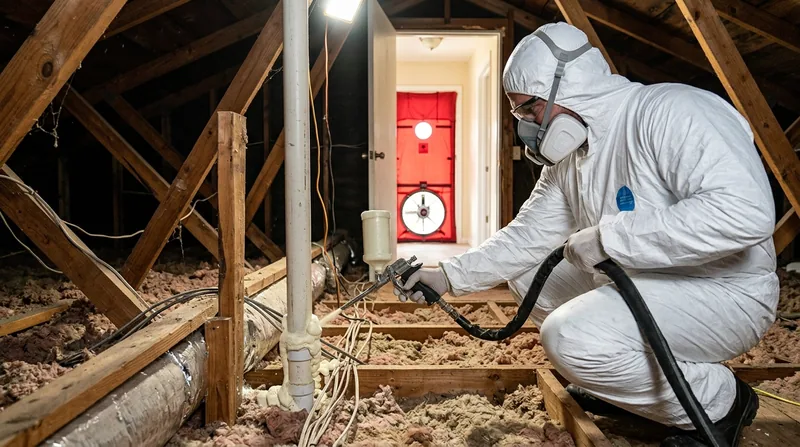




Cape Coral's canal-side housing stock sits in one of Florida's most humid climates, where outdoor air laden with moisture constantly seeks its way into air-conditioned living spaces. Nearly every home here rests on a slab with a vented attic above, and the stack effect pulls that humid outside air through ceiling penetrations, garage walls, and lanai-side rooms. Air sealing in Cape Coral stops that drift by sealing top plates, rim joists, and mechanical penetrations with spray foam, cutting the air changes per hour (ACH50) and lowering the cooling load your system has to fight. We use closed cell and open cell foam to plug the leaks that fiberglass never reaches, and we do it with the precision that matters in zone 2A heat and humidity. This is not a cosmetic upgrade; it is the difference between a home that breathes humid air all summer and one that stays tight.
Why Air Sealing Matters in Cape Coral's Hot, Humid Climate
Cape Coral's summer cooling season runs from May through October, with humidity in the air nearly every day. Your air handler sits in a vented attic that bakes at 140 degrees or higher, and the temperature difference between that attic and your living space creates a pressure imbalance. That pressure pulls humid outside air through every gap in your ceiling, around ductwork, and into walls where it condenses on cool surfaces. Over time, that moisture feeds mold, rots drywall, and forces your AC to work harder to remove the water vapor as well as the heat. Air sealing stops the leak at the source.
- We seal the top plate where walls meet the attic, the single biggest source of air leakage in a slab-on-grade home.
- We close off garage ceilings and lanai-side rooms where humid air drifts into cavities and condenses on ductwork.
- We foam around electrical penetrations, plumbing chases, and HVAC return plenums that pull outside air into the conditioned space.
- We seal rim joists and band joists on any elevated sections or additions where vented crawl spaces meet the living envelope.
Each of these leaks costs money every cooling season; sealing them cuts the ACH50 and lowers the load on your system.
Key info: Cape Coral and North Fort Myers sit on canals with air that is often 10 to 15 percent more humid than inland areas. A home in the Yacht Club district or near Burnt Store Marina experiences a stronger vapor drive than a home in Lehigh Acres, and air sealing is correspondingly more critical to moisture control and AC efficiency.
For more information on how air sealing fits into a complete attic strategy, see our attic spray foam insulation page, which covers the full envelope.
How We Perform Air Sealing in Cape Coral Homes
Air sealing starts with a walk-through of your attic, garage, and crawl spaces to identify where outside air enters the conditioned envelope. We look for gaps at the top plate, around mechanical penetrations, at band joists, and in garage ceilings. We then seal those gaps with spray foam, controlling the application thickness and pressure so the foam bonds to the substrate without forcing open drywall or framing. The process is quick, non-invasive, and produces an immediate drop in air leakage.
- We inspect the attic, garage, and any crawl spaces to map air leakage paths and moisture risk zones.
- We seal the top plate and rim joists with low-pressure spray foam applied in controlled passes to avoid over-expansion.
- We foam around electrical boxes, plumbing penetrations, and ductwork chases that pull outside air into the living space.
- We allow the foam to cure for 24 to 48 hours before re-entry, and we provide a written record of what was sealed and the foam type used.
The result is a tighter envelope and measurably lower cooling costs, especially in homes with high ceilings or complex roof lines.
Example: A 1970s-era concrete block home in Cape Coral with a vented attic and a lanai addition often has a top plate that was never sealed and a garage ceiling with gaps around the HVAC return. Air sealing those two areas alone can drop the ACH50 by 30 to 40 percent and cut the cooling load on the AC system by 8 to 12 percent.
See our garage spray foam insulation page for details on sealing garage ceilings and walls, which is often the first step in air sealing an older home.
| Approach | Description | Best for |
|---|---|---|
| Top Plate Sealing | Low-pressure spray foam applied to the joint where exterior walls meet the attic, sealing the rim space and the top of the rim board. | Slab-on-grade homes with vented attics; the single highest-impact air seal on a Cape Coral home. |
| Penetration Sealing | Foam applied around electrical boxes, plumbing chases, HVAC returns, and ductwork to prevent air leakage at mechanical interfaces. | Any attic or garage with visible gaps around wiring, piping, or mechanical systems. |
| Garage Ceiling Sealing | Foam applied to the garage ceiling and walls to separate the unconditioned garage from the living space above, including the top of the garage door header. | Garages and lanai-side rooms where humid air drifts into the ceiling cavity and AC ductwork. |
| Rim and Band Joist Sealing | Foam applied to the rim space at any elevated section, addition, or crawl space to seal the band joist and block the vapor drive. | Homes with additions, elevated sections, or vented crawl spaces; common in North Fort Myers and Burnt Store areas. |
| Closed Cell vs. Open Cell | Closed cell foam (R-6 per inch) is vapor-impermeable and moisture-resistant; open cell foam (R-3.5 per inch) is permeable and lower-cost, best for interior air sealing where moisture is not a concern. | Closed cell for humid zones like rim joists and garage ceilings; open cell for attic penetrations where the attic remains vented. |
Air Sealing Cost in Cape Coral: What to Expect
Air sealing jobs in Cape Coral typically start at around $650 for a focused seal of a top plate or garage ceiling in a smaller home. The final cost depends on the size of the home, the number of penetrations, the accessibility of the attic or crawl space, and whether you are sealing a single zone or the entire envelope. A 1,500-square-foot ranch with a straightforward attic layout and good access usually runs between $800 and $1,400. A larger home with complex roof lines, multiple additions, or a difficult crawl space can run $1,800 to $2,500 or higher. The best way to know your cost is to get a written estimate with R-value and thickness specifications for the foam being applied.
We recommend getting estimates from two or three contractors so you can compare scope, foam type, and price. A low estimate with no mention of R-value, thickness, or cure time is a warning sign; a high estimate with no breakdown of what is being sealed is also unhelpful. The right estimate tells you what foam is being used, where it is being applied, the thickness per pass, and the total board feet, so you can verify the work when it is done.
For a detailed pricing overview and to discuss your specific home, visit our pricing page or call us at (239) 360-6374 for a free estimate.
What to Look for When Hiring an Air Sealing Contractor Near Cape Coral
Air sealing is a precision job, and the quality of the work depends on the installer's knowledge of foam chemistry, local building code, and the specific failure modes of homes in this climate. When you are evaluating contractors near Cape Coral, ask for proof of insurance and check that the company is fully insured for spray foam work. Request references from recent jobs in Cape Coral or nearby areas, and ask those homeowners about the installer's communication, the condition of the attic after the work, and whether the seal has held up over time. Do not accept an estimate that does not specify the foam type, R-value, and thickness; do not accept a promise of re-entry in less than 24 hours; and do not accept a price far below market without understanding what is being cut. Many out-of-state contractors operate on a rig-and-run model, spraying a job in a single afternoon and leaving no local contact if a problem arises. The local independent contractor who backs the work with a warranty and a phone number you can call is a much safer choice.
- Verify that the contractor is fully insured for spray foam insulation and has a local address and phone number you can reach.
- Ask to see a written estimate that specifies the foam type (open cell or closed cell), the R-value per inch, the thickness per pass, and the total board feet being applied.
- Request references from homeowners in Cape Coral, Fort Myers, or North Fort Myers who have had air sealing work done in the past two years.
- Confirm that the contractor will provide mechanical ventilation during the cure period and will specify a 24 to 48 hour re-entry window before the attic is occupied.
- Ask about the contractor's permitting process and whether the work will require a city or county permit at your address; the contractor should help you navigate what applies locally.
The right contractor will answer all of these questions clearly and will be happy to provide a reference or a copy of their insurance certificate. If a contractor is evasive or dismissive of these questions, walk away.
Ready to get started? Contact us for a free estimate and a conversation about what air sealing can do for your home.
Air Sealing in Cape Coral: Pricing Guide
| Service | Price | Details |
|---|---|---|
| Top Plate Sealing | Starting at $650 | Sealing the rim space where walls meet the attic in a smaller 1,200 to 1,500 sq ft home with good access |
| Garage Ceiling and Penetrations | Starting at $850 | Sealing garage ceiling, wall gaps, and mechanical penetrations in a typical two-car garage with standard framing |
| Full Envelope Air Sealing | Starting at $1,200 | Top plate, garage, rim joists, and all penetrations in a 1,500 to 2,000 sq ft home; larger homes and complex layouts cost more |
| Large or Complex Jobs | On estimate | Multi-story homes, additions, crawl spaces, or difficult attic access require an on-site inspection before a firm price |
| Travel and Estimate | Included / Free | No mileage fee in Cape Coral and surrounding areas; free written estimate within 24 hours at (239) 360-6374 |
Indicative pricing, the exact cost depends on square footage, finish, and site access. Free personalized estimate within 24h at (239) 360-6374.


