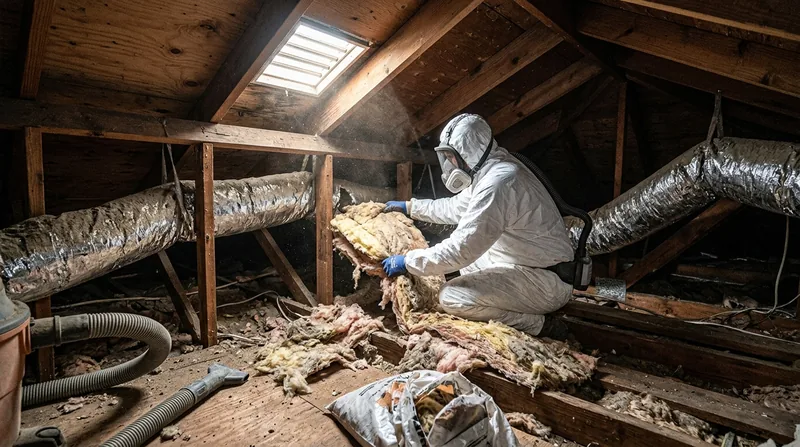




Cape Coral's housing stock sits almost entirely on slab foundations with vented attics that bake through long, humid summers. Most homes date from the late 1950s onward, running from Cape Harbour down through Pelican and up toward Burnt Store, and nearly every one carries decades of old insulation in attics that have absorbed moisture from the region's constant humidity. Insulation removal in Cape Coral is the essential first step before any retrofit, clearing out moisture-damaged fiberglass, cellulose, or failed foam so new spray foam can be installed on a clean, dry substrate. Hurricane Ian in 2022 accelerated this work across Lee County, and the pattern continues: homes along the canals live in damp air year-round, and their attics show it. We remove old insulation carefully, clear ductwork and rafter bays, and prepare the attic for the closed cell or open cell foam that actually handles this climate zone's heat and humidity. The difference is immediate: a properly sealed attic stops the humid air from leaking into the ceiling cavity where it would condense and rot the substrate.
Why Old Insulation Fails in Cape Coral's Humid Climate
Cape Coral sits in IECC climate zone 2A, hot and humid, with vapor pressure driving from the wet outside air toward the air-conditioned interior. Vented attics in this region accumulate moisture year-round, and fiberglass or cellulose insulation absorbs it like a sponge. Once insulation becomes damp, it loses R-value, promotes mold growth in the wood framing, and creates the musty smell that tells you the attic is no longer working. Block construction on slab means ductwork runs through that vented attic, and when humid air leaks into the ceiling cavity around the ducts, the problem accelerates.
- Old fiberglass and cellulose insulation absorbs moisture and loses thermal resistance in humid climates.
- Vented attics in Cape Coral allow humid outside air to enter the ceiling cavity, especially around ductwork and penetrations.
- Moisture-damaged insulation promotes mold and rot in wooden roof framing and truss members.
- Removing failed insulation and sealing the attic stops the vapor drive before it damages the structure.
Clearing out old insulation is not just cleanup; it is the foundation of a durable retrofit in this climate.
Key info: Homes in Burnt Store, Pelican, and Cape Harbour have all seen this pattern. One homeowner in North Fort Myers pulled out damp cellulose from a 1970s attic and found the truss chords already soft. Removal and re-insulation with closed cell foam stopped the problem cold.
How We Remove Insulation and Prepare Your Attic in Cape Coral
Our removal process is systematic and clean. We bring in a commercial vacuum truck to extract old insulation from the attic and ductwork area, seal the ductwork temporarily, clear debris from the rafter bays and rim joists, and inspect the substrate for moisture, mold, or structural damage before we leave. If the wood is wet or soft, we tell you straight and do not spray foam over it. If the substrate is sound and dry, the attic is ready for new foam. The whole job typically takes one day for a standard Cape Coral attic.
- We use a commercial-grade vacuum truck to remove old insulation without disturbing the rest of your home.
- All ductwork is sealed or temporarily protected to prevent contamination during removal.
- We inspect the attic framing, rim joists, and roof deck for moisture, mold, or structural issues.
- We clear all debris, loose fill, and fiberglass particles so the substrate is clean and dry before we leave.
- We document the condition and provide a written estimate for attic spray foam insulation or other retrofit work.
The goal is a blank slate: dry wood, clear rafter bays, and no old material left behind to trap moisture.
Local example: A 1,400 square-foot attic in Estero with settled cellulose and damp fiberglass took four hours to vacuum, inspect, and clear. The homeowner then chose closed cell spray foam to seal the roof deck and stop the humidity problem for good.
Removal Methods and What Works Best in Cape Coral
| Approach | Description | Best for |
|---|---|---|
| Vacuum Extraction | Commercial-grade truck vacuum removes loose fiberglass, cellulose, and mineral wool from attic cavities without manual handling. | Settled or loose-fill insulation in vented attics; fastest and cleanest method for most Cape Coral homes. |
| Manual Removal and Bagging | Crew hand-removes rigid boards, batts, or matted insulation that cannot be vacuumed, placing material in disposal bags. | Rigid foam boards, dense batts, or wet insulation that clogs the vacuum; used when access is tight or attic height is low. |
| Damp Insulation Removal | Careful extraction of moisture-saturated material with extra attention to wood substrate inspection and drying verification. | Attics with visible moisture, mold staining, or after water intrusion; substrate must be dry before any new insulation is installed. |
| Substrate Inspection and Prep | Post-removal inspection of rafter bays, rim joists, ductwork, and roof deck; documentation of any soft wood, mold, or missing sections. | All jobs; determines readiness for new foam and identifies any structural repair needed before re-insulation begins. |
Insulation Removal Cost in Cape Coral: What to Expect
Insulation removal in Cape Coral typically starts at $950 for a standard single-story attic and rises with attic size, insulation type, and how much debris is present. A 1,200 to 1,500 square-foot attic with settled fiberglass or cellulose runs $1,200 to $1,800. Larger homes, multiple story attics, or jobs with damp material, heavy debris, or tight access cost more. The best way to know is to get a written estimate on site; we measure the attic, assess the substrate, and give you a firm price before work begins. See our full pricing overview for more detail on what moves the cost up or down.
Getting two or three estimates is smart. Compare what each contractor will remove, how they will inspect the substrate, whether they will provide a written report, and what they recommend for the next step. A low-ball estimate with no detail is a warning sign; a thorough walk-through and a clear scope is what you want.
What to Look for When Hiring an Insulation Removal Contractor Near Me in Cape Coral
Insulation removal is skilled work, and the contractor you hire will set the stage for whatever retrofit comes next. When evaluating any spray foam or insulation contractor near Cape Coral, verify that they carry full insurance (general liability and workers compensation), ask for references from recent jobs in your area, and request a detailed written estimate that includes attic square footage, material type, substrate condition, and disposal. Permits for insulation work are rarely required in Cape Coral itself, but always confirm with your local building department before you start. If you have an HOA, check whether architectural approval is needed for any exterior work or equipment staging.
Ask the contractor how they will handle moisture or mold findings, what they will do if the substrate is soft or rotted, and whether they will provide a written report after removal. The best contractors walk away from jobs where the substrate is not ready, and they say so upfront. That honesty is your protection. Once you have chosen a contractor, contact us for a free estimate or call (239) 360-6374 for a no-obligation consultation.
Insulation Removal in Cape Coral: Pricing Guide
| Service | Price | Details |
|---|---|---|
| Standard attic removal (1,000-1,500 sq ft) | Starting at $950 | Settled fiberglass or cellulose, single-story home, good attic access, substrate inspection and clearance included |
| Larger or multi-story attic (1,500-2,500 sq ft) | Starting at $1,400 | Expanded square footage, multiple roof lines, or denser insulation; vacuum extraction and full substrate documentation |
| Damp or heavy debris removal | Starting at $1,800 | Moisture-saturated material, dense batts, rigid foam boards, or significant mold staining requiring careful handling and drying verification |
| Complex or large-scale job | On estimate | Multi-unit properties, commercial spaces, or attics with structural damage; on-site inspection required for accurate pricing |
| Travel and disposal | Included | No separate mileage or disposal fee within Cape Coral and surrounding service areas; all material removed and lawfully disposed |
| Free written estimate | No charge | Detailed scope with square footage, material type, substrate condition assessment, and next-step recommendation within 24 hours |
Indicative pricing, the exact cost depends on square footage, finish, and site access. Free personalized estimate within 24h at (239) 360-6374.


