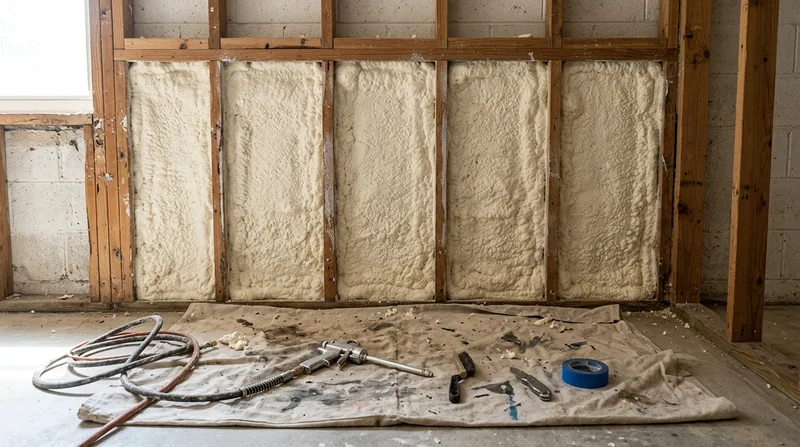




Open cell spray foam insulation in Cape Coral fills the wall cavities and attic framing of the thousands of concrete block homes built here since the 1950s, sealing the gaps that let humid outside air reach your air-conditioned rooms. Cape Coral's canal-front location and hot, humid climate mean moisture pressure is constant, and a vented attic full of leaks works against your cooling system every day. Open cell foam expands to fill every void, quiets sound transmission, and slows the stack effect that pulls damp air upward through your ceiling. Unlike closed cell foam, open cell is breathable once cured, making it the right choice for sound control and moisture management in older attic spaces where ventilation is part of the code. We help Cape Coral homeowners and builders choose the right foam type for their climate zone, their framing, and their budget, and we install it to manufacturer spec with the ventilation and re-entry protocol that keeps your home safe during cure.
Why Open Cell Spray Foam Matters in Cape Coral's Hot, Humid Climate
Cape Coral sits in IECC climate zone 2A, cooling-dominated and humid year-round. Your attic bakes in the Florida sun while humid air from the canals and the gulf creeps in through every gap in your framing, rim board, and ductwork. A vented attic with fiberglass batts or loose-fill blown insulation does not stop that air movement, and the moisture reaches your drywall and insulation where it condenses and promotes mold. Open cell foam seals the framing cavities and the rim board, blocking that moisture-laden air before it enters your conditioned space.
- Expands to fill irregular cavities and gaps around electrical wiring, plumbing, and framing members that fiberglass cannot seal.
- Reduces the stack effect that pulls humid outside air up through your ceiling and into your attic.
- Absorbs and dampens sound transmission between floors and from outside traffic and wind.
- Breathes once cured, allowing any moisture trapped in the cavity to dry out rather than accumulate.
- Works in older block homes with uneven or damaged framing that closed cell foam may not bond to as reliably.
In Cape Coral and across Lee County, open cell foam in the attic and rim board is the most cost-effective way to stop the moisture and air leakage that drives cooling bills and humidity complaints.
Key info: Cape Coral's older concrete block homes are built on slab foundations with vented attics directly above living spaces. A single-story home with a 1,500-square-foot attic can lose 40 to 60 percent of its conditioned air through gaps in the ceiling, rim board, and ductwork. Open cell foam seals those gaps without requiring you to remove the roof or demolish interior walls.
How We Install Open Cell Spray Foam Insulation in Cape Coral Attics and Walls
We start with a site inspection to identify the attic framing, existing insulation, mechanical systems, and any moisture or ventilation issues that need to be addressed before we spray. We measure the space, calculate board footage, and provide a written estimate with the R-value and thickness we will achieve. On spray day, we set up mechanical ventilation in the attic and seal off access to living spaces, apply the foam to the specified thickness in multiple passes, and allow the proper cure time before we leave the site. We clean and remove all plastic sheeting and tape, and we schedule a re-entry inspection before you occupy the space.
- We inspect the attic and rim board to identify gaps, leaks, existing insulation type, and any moisture damage or active leaks that must be fixed first.
- We provide a written estimate showing the R-value per inch, the thickness we will apply, and the total board footage at the agreed price.
- We set up mechanical ventilation during the spray and cure period to manage fumes and ensure safe re-entry within 24 to 48 hours.
- We spray in controlled passes, allowing proper flash-off between coats to achieve uniform density and the specified R-value.
- We clean the attic, remove all plastic and tape, and verify the foam is cured before we leave the job.
The result is a sealed, insulated attic that stops air leakage, controls moisture, and lets your cooling system work efficiently without fighting humid outside air and conductive heat gain.
Real example: A 1970s concrete block home in Burnt Store with a 1,200-square-foot attic and R-19 fiberglass batts over the rim board. The attic temperature reaches 140 degrees in summer, and the rim board is a major air leak. We removed the old batts, sealed the rim board and all ceiling penetrations with 3.5 inches of open cell foam (R-13), and left the attic ventilation intact per code. The homeowner reported a 12-degree drop in the living space temperature and no more humidity smell in the bedrooms.
Open Cell Spray Foam Methods and Applications in Cape Coral
| Approach | Description | Best for |
|---|---|---|
| Attic Framing and Rim Board | Open cell foam sprayed against the underside of the roof deck and into the rim board cavity, sealing air leakage and providing R-13 to R-15 per 3.5 inches. | Older Cape Coral block homes with vented attics and high cooling bills from air leakage through the ceiling. |
| Wall Cavity Retrofit | Open cell foam injected into the cavities of exterior walls without removing drywall, filling gaps around wiring and framing. | Exterior walls of block homes where interior drywall is intact and you want to improve thermal and moisture control without demolition. |
| Lanai and Garage Ceiling | Open cell foam sprayed in the ceiling cavity of a screened lanai or garage, sealing the gap between the conditioned house and the unconditioned space. | Lanais and garages attached to the main house where humidity and heat infiltration are a problem, and you want sound dampening as a bonus. |
| Sound Dampening in Attic or Walls | Open cell foam in wall and attic cavities absorbs sound transmission from outside traffic, wind, and rain, reducing noise inside the home. | Homes near busy roads or in canal-front areas of Cape Coral where wind and water noise are a concern, and fiberglass alone is insufficient. |
| Top-Up Over Existing Insulation | Open cell foam sprayed over old fiberglass batts or blown insulation to seal gaps and add R-value without full removal. | Attics with sound insulation that is still in place but has settled or has gaps around penetrations, when removal cost is not justified. |
Each method is chosen based on your home's framing, the existing insulation, the moisture and air leakage pattern, and your budget. We recommend closed cell spray foam for crawl spaces and rim boards where moisture control and structural support are priorities, and open cell for attics and walls where breathability and sound control matter more.
Open Cell Spray Foam Insulation Cost in Cape Coral: What to Expect
Open cell spray foam in Cape Coral typically starts at $0.55 to $0.70 per board foot, depending on the attic size, access, existing insulation that must be removed, and the R-value you need. A typical attic top-up with 3 to 4 inches of open cell foam over existing fiberglass runs 800 to 1,200 board feet and costs $440 to $840 before any removal or air sealing work. A full attic retrofit with insulation removal and rim board sealing can run 1,500 to 2,500 board feet and cost $825 to $1,750. The price does not include removal of old insulation, which is a separate line item, or any air sealing work on ductwork or penetrations outside the foam spray area.
Factors that move the cost up include removal and disposal of old fiberglass or blown insulation, difficult attic access (knee walls, low headroom, narrow entries), moisture remediation or mold treatment before spraying, and mechanical ventilation setup for larger attics. We always provide a written estimate with the board footage, R-value, and thickness specified, and we do not spray until you approve the scope and price. Get a free estimate from us, and compare it with at least one other contractor to verify the price and the R-value you are getting.
For a detailed breakdown of pricing across all foam types and applications, see our full pricing page.
What to Look for When Hiring a Spray Foam Insulation Contractor Near Cape Coral
Spray foam insulation is not a DIY job, and the difference between a careful installation and a careless one shows up in odor, moisture problems, and wasted money within months. When you call a contractor, ask for a written estimate that includes the R-value per inch, the thickness of each pass, and the total board footage. Verify that the contractor carries liability insurance and can provide a certificate of insurance on request. Ask for references from recent jobs in Cape Coral or nearby, and call them to confirm the work was done on time, the smell cleared within 48 hours, and the homeowner is satisfied with the result.
- Request a written estimate with the R-value, thickness, and board footage specified, not just a per-square-foot price or a guess.
- Verify the contractor carries full liability insurance and ask to see the certificate of insurance before the job starts.
- Ask whether the contractor will set up mechanical ventilation during the spray and cure, and what the re-entry window is (24 to 48 hours is the honest answer).
- Call references from the last three jobs to confirm the work was done on schedule, the smell cleared within two days, and the homeowner is satisfied.
- Confirm that the contractor understands Cape Coral's building code and any HOA rules that apply to your property, especially if you are in a master-planned community.
- Check that the estimate includes all prep work, cleanup, and any air sealing or insulation removal you need, so there are no surprises on the invoice.
Avoid any contractor who promises a price far below market, refuses to give you a written estimate with R-value and thickness, or guarantees immediate re-entry without mechanical ventilation. A local, insured contractor who takes time to inspect your attic, answers your questions, and stands behind the work is worth the phone call. Contact us at (239) 360-6374 for a free, no-obligation estimate, and we will walk you through the process and answer any questions about your specific home.
Open Cell Spray Foam Insulation in Cape Coral: Pricing Guide
| Service | Price | Details |
|---|---|---|
| Open Cell Spray Foam, Attic Top-Up | Starting at $0.55/board ft | 3 to 4 inches of open cell foam over existing insulation, 800 to 1,200 board feet, no removal required |
| Open Cell Spray Foam, Full Attic Retrofit | Starting at $0.60/board ft | Complete spray with insulation removal, rim board sealing, and new open cell foam to R-13 or R-15 thickness |
| Open Cell Spray Foam, Wall Cavity Injection | Starting at $0.65/board ft | Exterior wall cavities of block homes retrofitted without drywall removal, typically 300 to 600 board feet per wall section |
| Insulation Removal and Disposal | On estimate | Old fiberglass batts, blown insulation, or damaged foam removal depends on attic size, contamination, and hauling distance |
| Travel and Setup | Included | No mileage charge or travel fee for jobs in Cape Coral and surrounding service areas within Lee and Collier counties |
| Estimate | Free | Written estimate with R-value and thickness specs provided within 24 hours, no obligation to book work |
Indicative pricing, the exact cost depends on square footage, finish, and site access. Free personalized estimate within 24h at (239) 360-6374.


