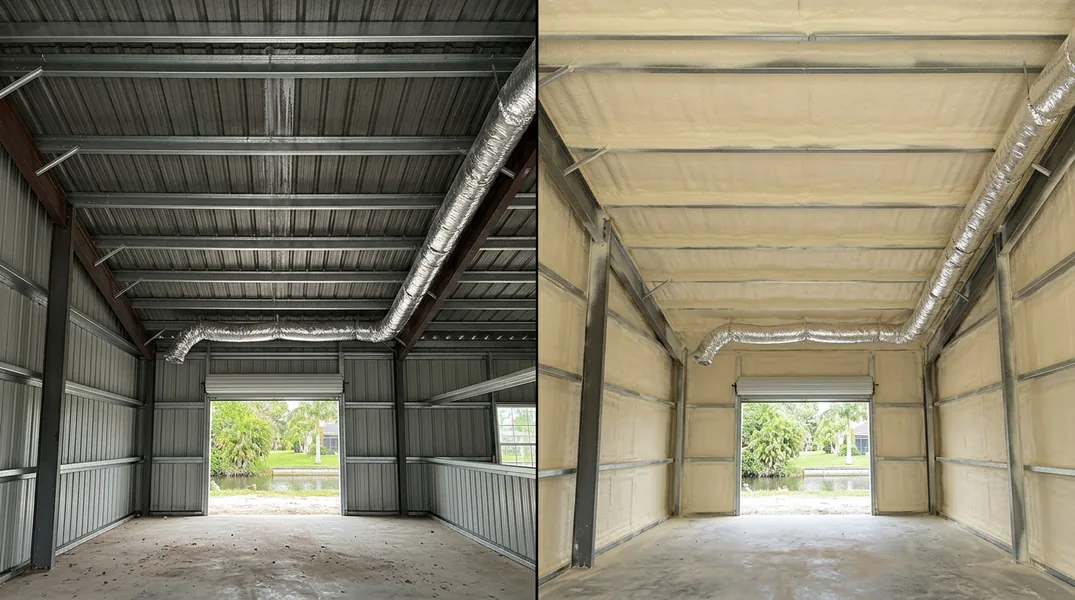
Why 1950s and 1960s Block Homes Need Better Insulation
Homes built in the 1950s and 1960s along the Cape Coral canals represent a unique chapter in Southwest Florida real estate. These classic concrete block structures were designed for durability, but they were not built with modern energy efficiency in mind. Back then, air conditioning was a luxury, and insulation standards were minimal compared to today's building codes. The thick concrete blocks provide some thermal mass, but they offer virtually no resistance to heat transfer when the Florida sun beats down for eight months of the year.
If you own one of these vintage canal homes, you've likely noticed that cooling costs spike dramatically during summer months. The original construction often lacks adequate insulation in attics, walls, and crawl spaces. This means your air conditioning system works overtime, driving up utility bills and reducing the lifespan of expensive HVAC equipment. Modern homeowners in Cape Coral are discovering that upgrading insulation is one of the most effective ways to reclaim comfort and lower energy expenses without replacing the entire home.
Is Spray Foam Insulation Worth It for Historic Block Homes?
The question of whether spray foam insulation is worth the investment often comes down to your long-term goals as a homeowner. For 1950s and 1960s block homes, the answer is almost always yes. Attic Spray Foam Insulation addresses the root cause of energy waste in these older structures: air leaks and inadequate thermal barriers. Unlike traditional fiberglass batts or blown-in cellulose, spray foam expands to fill every cavity, crack, and void. This means it seals air leaks that would otherwise allow conditioned air to escape into the attic, where it's wasted.
The financial case for spray foam becomes even stronger when you factor in Florida's climate. The combination of intense heat, high humidity, and salt air from nearby canals creates harsh conditions that degrade traditional insulation over time. Spray foam resists moisture absorption and doesn't settle or compress like older materials. Homeowners typically see energy savings of 15 to 30 percent after upgrading to spray foam, and many recoup their investment within five to seven years through lower cooling bills. Beyond the immediate energy savings, spray foam adds structural integrity to attics and helps protect against moisture-related damage, which is critical for canal-side properties prone to humidity fluctuations.
Spray Foam Insulation Safety: What You Need to Know
Safety is a legitimate concern when considering any home improvement project, and spray foam insulation is no exception. The good news is that when installed by trained professionals, spray foam is safe and effective. The potential risks arise during and immediately after installation, not during normal use in a finished, sealed attic. During application, spray foam releases isocyanates and other volatile compounds that require proper ventilation and protective equipment. This is precisely why hiring a certified contractor matters. Professional installers wear respiratory protection, ensure proper ventilation during the curing process, and follow EPA guidelines for safe application.
Once fully cured (typically within 24 hours), spray foam poses no ongoing safety risk to occupants. The material is inert and does not off-gas into living spaces when properly installed and sealed. Closed Cell Spray Foam Insulation is particularly safe because its dense structure creates a complete vapor barrier, preventing any material degradation or off-gassing. Reputable contractors in Cape Coral will ensure your attic space is properly ventilated after installation and will never apply spray foam in occupied areas. If you have concerns about spray foam insulation safety, ask your contractor about their certifications, their curing protocols, and whether they recommend post-installation ventilation for your specific home.
Common Spray Foam Insulation Problems and How to Avoid Them
Like any building material, spray foam insulation can develop problems if installed incorrectly or if the wrong type is chosen for your application. One of the most common issues is improper application density. If the foam is applied too thinly or unevenly, it won't provide the R-value promised, and gaps may remain. Another frequent problem occurs when spray foam is installed over a vapor barrier or in a way that traps moisture between the foam and the building structure. In humid climates like Southwest Florida, this can lead to condensation and mold growth. Poor ventilation planning is another culprit; if an attic is sealed too aggressively with spray foam without accounting for proper airflow, moisture can accumulate.
Spray foam off gassing is a concern some homeowners raise, but it's largely a misunderstanding. Off gassing occurs during and immediately after installation, not years later. A qualified contractor will manage this by ensuring proper ventilation and allowing adequate curing time before you occupy the space. Additionally, using the right type of spray foam for your application matters. Open Cell Spray Foam Insulation is more breathable and better suited for certain applications, while closed cell foam is ideal for moisture-prone areas. The best way to avoid spray foam problems is to work with an experienced, certified contractor who understands the unique challenges of insulating older block homes in Florida's climate. Cape Coral Spray Foam Insulation has years of experience navigating these issues for homeowners throughout the region.
Spray Foam Insulation Pros and Cons for Canal-Side Properties
Every insulation solution has trade-offs, and understanding the pros and cons of spray foam helps you make an informed decision. The advantages are substantial: superior air sealing, high R-value per inch, moisture resistance, pest deterrence, and long-term durability. For canal-side homes where humidity and salt air are constant challenges, these benefits are invaluable. Spray foam won't rot, settle, or degrade the way traditional materials do. It also provides structural support to roof trusses and can help stabilize older attics in historic homes. The energy savings alone justify the investment for most homeowners, and the added protection against moisture and pests provides peace of mind.
The primary disadvantage is upfront cost. Spray foam typically costs more than fiberglass or cellulose insulation, though the long-term savings offset this premium. Another consideration is that spray foam installation is permanent; if you ever need to access wiring or ductwork in the future, removal can be challenging and expensive. Some homeowners also worry about off gassing, though this concern is largely addressed through proper installation and ventilation. For canal-side properties in particular, the pros outweigh the cons. The moisture-resistant properties, durability, and superior performance in Florida's climate make spray foam the smart choice for protecting and maintaining 1950s and 1960s block homes. If you're weighing your options, we recommend getting a free estimate from a local expert who can assess your specific situation.
Getting Started: Attic Spray Foam Insulation Near Me in Cape Coral
If you're ready to improve your home's energy efficiency and comfort, the first step is scheduling a professional assessment. A qualified contractor will inspect your attic, identify air leaks, assess your current insulation, and recommend the best approach for your specific home. For 1950s and 1960s block homes, this might involve a combination of Attic Spray Foam Insulation and Wall & Injection Foam Insulation to address both horizontal and vertical surfaces. The contractor will discuss pricing, timeline, and what to expect during and after installation.
Cape Coral Spray Foam Insulation specializes in upgrading older homes throughout the region. Our team understands the unique challenges of insulating 1950s and 1960s construction, and we're familiar with the specific climate and environmental factors that affect canal-side properties. We use only high-quality materials, follow all safety protocols, and stand behind our work with professional service. Whether you're concerned about energy bills, moisture problems, or simply want to make your home more comfortable year-round, we're here to help. Call us today at (239) 360-6374 or visit our website to schedule your free estimate and take the first step toward a more efficient, comfortable home.
Looking for a professional spray foam insulation contractor in Cape Coral? Cape Coral Spray Foam Insulation responds fast for all your spray foam insulation needs.
Get a Free Quote