Understanding the Cape Coral Climate and Your Insulation Needs
If you own a home in Cape Coral, you're dealing with a unique climate challenge. Florida's subtropical heat, humidity, and occasional cooling demands mean your attic works overtime. The question isn't whether you need insulation, but rather which approach makes the most sense for your specific situation and budget.
Many homeowners face a crossroads: should they invest in simple air sealing, or go all-in with Attic Spray Foam Insulation? The answer depends on your current insulation condition, energy bills, long-term plans, and what you're trying to achieve. This article cuts through the marketing noise and gives you the honest facts you need to make an informed decision.
What Is Air Sealing, and Is It Enough?
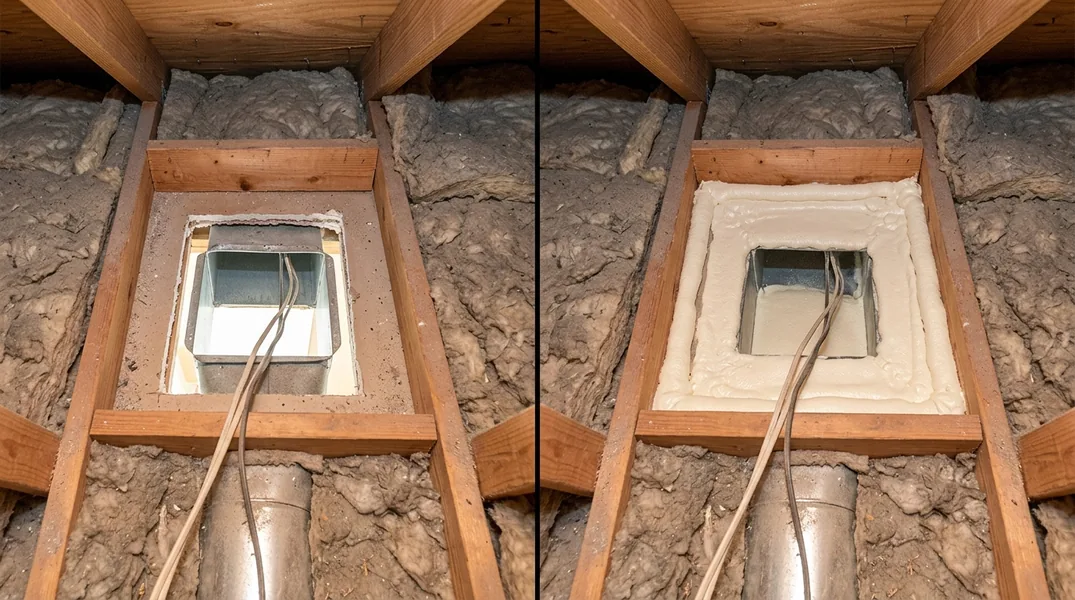
Air sealing is the process of closing gaps, cracks, and holes in your attic where conditioned air escapes. Think of it as plugging the leaks in your home's envelope. Contractors use caulk, weatherstripping, foam board, and other materials to seal air leaks around penetrations like pipes, wires, and ductwork. It's a targeted, often less expensive approach than full insulation replacement.
For some homes, air sealing alone can deliver meaningful energy savings. If your attic already has adequate insulation depth and your main problem is air leakage, sealing those gaps can reduce your cooling costs by 10 to 15 percent. However, air sealing doesn't increase your R-value (the measure of insulation's thermal resistance). If your attic insulation is thin, old, or compressed, air sealing is treating a symptom, not the root problem. In Cape Coral's hot climate, you need both adequate insulation depth and sealed air leaks to achieve optimal comfort and efficiency.
Spray Foam Insulation R Value Per Inch: What You're Really Getting
Closed Cell Spray Foam Insulation delivers approximately 6.0 to 6.5 R-value per inch, while Open Cell Spray Foam Insulation provides about 3.5 to 3.6 R-value per inch. This is a critical difference when you're comparing materials. Closed cell foam is denser, more moisture-resistant, and offers superior thermal performance in a thinner application. Open cell foam is lighter, more flexible, and typically more affordable, but requires greater thickness to achieve the same R-value.
To put this in perspective, traditional fiberglass batts deliver roughly 3.2 to 3.8 R-value per inch. That means 6 inches of closed cell spray foam outperforms 10 inches of fiberglass in terms of pure insulation value. However, R-value alone doesn't tell the whole story. Spray foam also seals air leaks as it expands and cures, which fiberglass cannot do. This combination of high R-value and air-sealing capability is why many homeowners consider spray foam a comprehensive solution rather than just an insulation upgrade.
How Thick Should Spray Foam Be? Finding the Right Depth for Florida
The thickness of spray foam you need depends on your state's energy code and your personal comfort goals. Florida's energy code (based on the International Energy Conservation Code) recommends an R-value of R-38 for attics in most of the state. To achieve R-38 with closed cell spray foam, you'd need approximately 6 to 6.5 inches. With open cell foam, you'd need roughly 10 to 11 inches.
However, many builders and energy-conscious homeowners in Cape Coral go beyond the minimum. Installing 8 inches of closed cell foam (R-48 to R-52) provides a significant buffer, better performance on extremely hot days, and added resilience if your air conditioning fails temporarily. The trade-off is cost: thicker applications mean more material and labor. During a free estimate with Cape Coral Spray Foam Insulation, a professional can assess your current attic depth and recommend the optimal thickness based on your energy goals and budget.
R Value Requirements by State and Tax Incentives for Cape Coral Homeowners
Florida's building code specifies R-38 for attic insulation in most zones. However, federal tax incentives and local utility rebates can make upgrading to higher R-values financially attractive. The federal Inflation Reduction Act expanded the insulation tax credit to allow homeowners to claim up to 30 percent of the cost of qualifying insulation improvements, capped at $3,600 per year through 2032.
Beyond the federal insulation tax credit, many Florida utilities offer insulation rebates for energy efficiency upgrades. These rebates can offset 10 to 25 percent of your project cost, making spray foam more affordable than it first appears. When you factor in the tax credit, rebates, and long-term energy savings, a full spray foam installation often pays for itself within 5 to 7 years. To learn what incentives apply to your specific situation, contact Cape Coral Spray Foam Insulation at (239) 360-6374 for personalized guidance.
Full Spray Foam vs. Air Sealing: Which Is Right for Your Cape Coral Home?
The honest answer is that the best choice depends on your home's current condition and your financial situation. If your attic already has 6 inches or more of insulation in good condition, and your energy bills are reasonable, air sealing alone might be sufficient and cost-effective. You'll eliminate drafts and reduce air leakage without the larger investment of a full foam installation.
However, if your insulation is thin (less than 4 inches), compressed, wet, or missing in spots, a full Attic Spray Foam Insulation project delivers superior long-term value. You gain higher R-value in less space, complete air sealing, better moisture resistance (especially important in Florida's humid climate), and the peace of mind that comes with a comprehensive solution. Spray foam also prevents future settling and degradation, unlike fiberglass batts. For homeowners planning to stay in their Cape Coral home for 10 or more years, spray foam typically represents the smarter investment.
Getting Professional Guidance and Your Next Steps
The decision between air sealing and full foam insulation shouldn't be made in a vacuum. Every attic is different, and what works for your neighbor's home may not be ideal for yours. A professional energy audit and visual inspection reveal exactly where your home is losing energy and which approach will deliver the greatest return on investment.
Cape Coral Spray Foam Insulation offers comprehensive attic assessments and honest recommendations tailored to your home and goals. Whether you need air sealing, full foam installation, or a hybrid approach, our team will walk you through the options, explain the R-value requirements, and help you understand how tax credits and rebates apply to your project. Call us today at (239) 360-6374 or request a free estimate to get started on a more comfortable, efficient home.
Looking for a professional spray foam insulation contractor in Cape Coral? Cape Coral Spray Foam Insulation responds fast for all your spray foam insulation needs.
Get a Free Quote